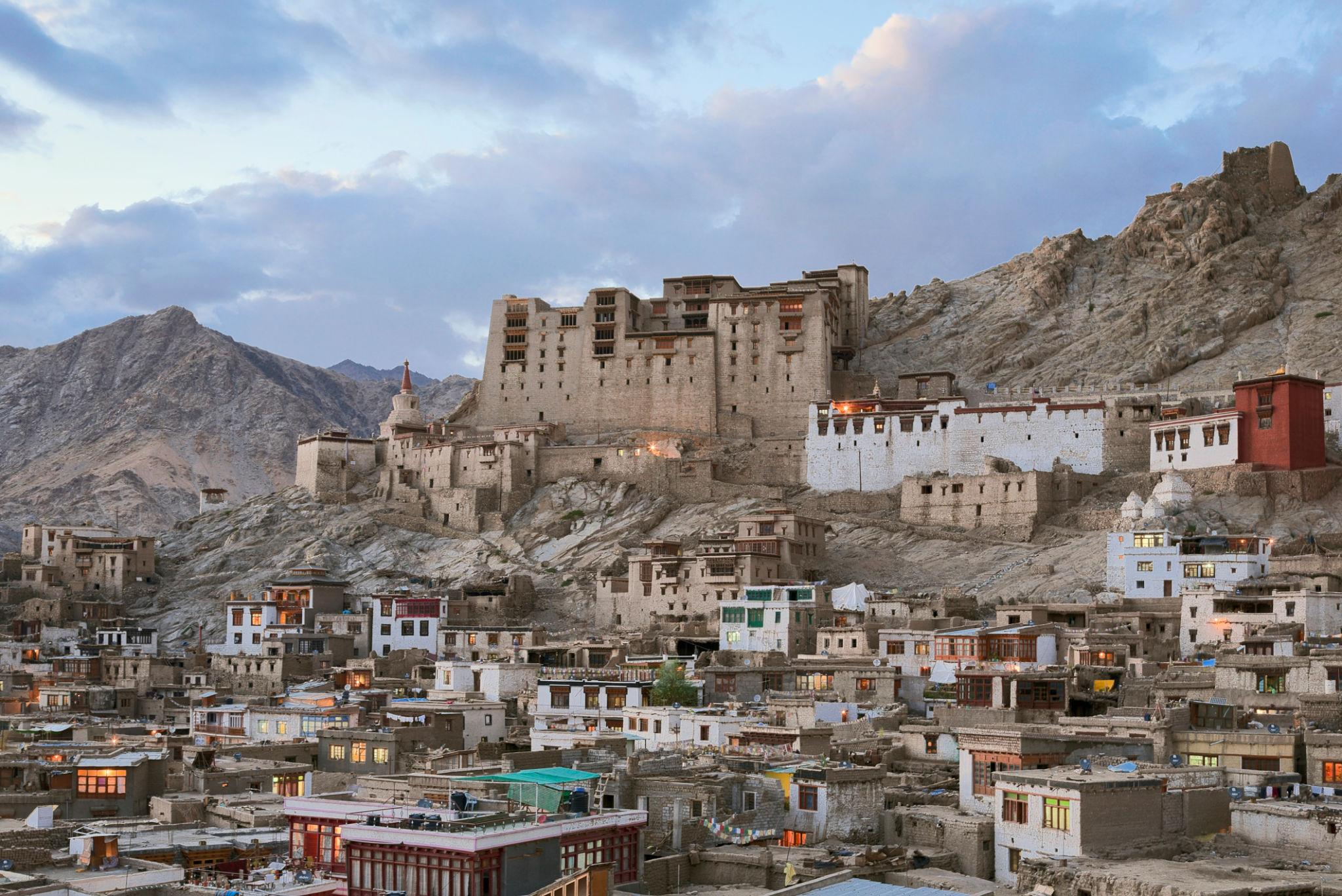



Step into the royal history of Ladakh with a visit to Leh Palace, one of the region’s most iconic historical landmarks. Perched on a hill overlooking Leh town, this magnificent nine-storey palace offers a fascinating glimpse into Ladakh’s rich heritage, architecture and royal past.
Built in the 17th century, Leh Palace was once the residence of the Ladakhi royal family. Its traditional Tibetan-style architecture, ancient corridors, wooden balconies and historic rooms reflect the cultural influence and unique identity of the region.
From the palace, visitors can enjoy breathtaking panoramic views of Leh town, the surrounding mountains and the distant Himalayan ranges. The location is especially popular among photographers and history enthusiasts who wish to capture the beauty and character of old Ladakh.
A visit to Leh Palace is a journey through time, offering travellers the opportunity to discover the stories, traditions and royal heritage that shaped Ladakh. Whether you are interested in history, culture, architecture or photography, Leh Palace is a must-visit destination during your journey through Leh Ladakh.
-
Bus, Airlines
-
5,416 metres
-
2-15
Overview
Travel is the movement of people between relatively distant geographical locations, and can involve travel by foot, bicycle, automobile, train, boat, bus, airplane, or other means, with or without luggage, and can be one way or round trip. Travel can also include relatively short stays between successive movements.
The origin of the word “travel” is most likely lost to history. The term “travel” may originate from the Old French word travail, which means ‘work’. According to the Merriam Webster dictionary, the first known use of the word travel was in the 14th century.
It also states that the word comes from Middle English travailen, travelen (which means to torment, labor, strive, journey) and earlier from Old French travailler (which means to work strenuously, toil). In English we still occasionally use the words “travail”, which means struggle. According to Simon Winchester in his book The Best Travelers’ Tales (2004), the words “travel” and “travail” both share an even more ancient root: a Roman instrument of torture called the tripalium (in Latin it means “three stakes”, as in to impale).